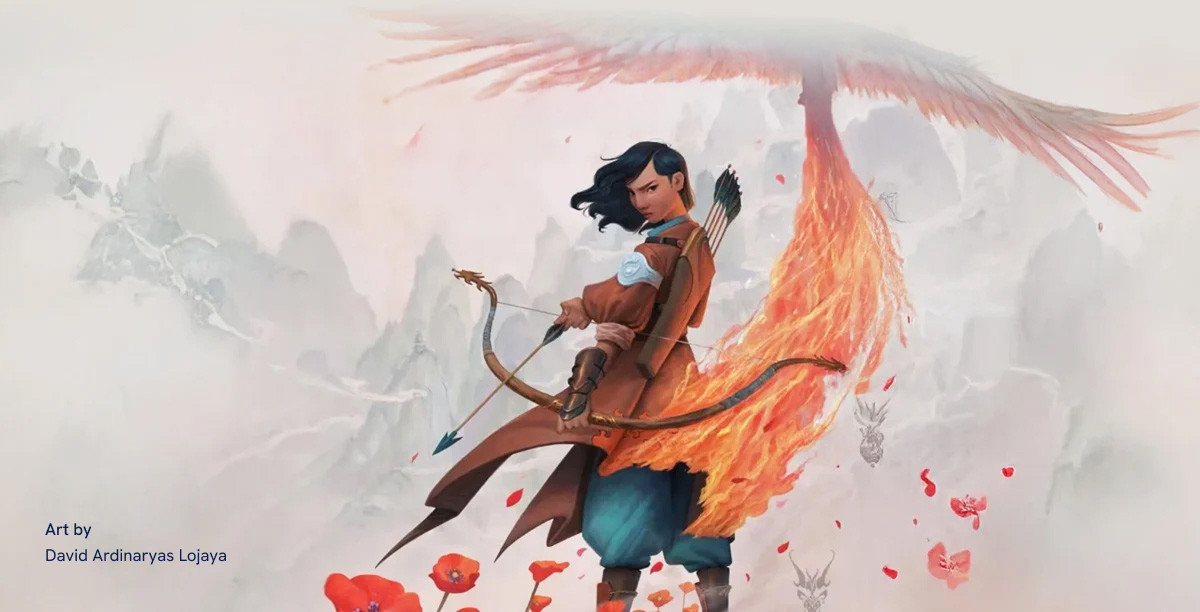
Grimdark Fantasy Book Recommendation
R.F. Kuang’s Poppy War trilogy stands out in grimdark fantasy book recommendations because of its grounding in 20th-century East Asian history, balanced magical consequences, and shifting character desires. By pairing real-world wartime atrocities with high-stakes shamanism, Kuang delivers a masterclass in morally complex, tragic storytelling that avoids generic fantasy tropes.
R.F. Kuang’s Poppy War trilogy stands out in grimdark fantasy book recommendations because of its grounding in 20th-century East Asian history, balanced magical consequences, and shifting character desires.
By pairing real-world wartime atrocities with high-stakes shamanism, Kuang delivers a masterclass in morally complex, tragic storytelling that avoids generic fantasy tropes.
I can’t quite remember how long ago I turned the final page of R.F. Kuang’s Poppy War trilogy. It could have been three years ago, or it could have been yesterday. The point is, I still think about it all the time. It was one of those rare series that made something click in my brain—it showed me that the exact kind of story I wanted to write was entirely possible, especially when it comes to complex morality, gut-wrenching tragedy, and characters who mess up in very real ways.
If you haven’t read any of The Poppy War books yet and want to go in blind, here’s your light spoiler warning. I won’t get into specific plot points until we hit the breakdown section, so consider this first part my pitch for why this series deserves a top spot on your reading list.
R. F. Kuang and The Poppy War
Rebecca F. Kuang was born in Guangzhou, China, and grew up in Dallas after immigrating to the US with her parents at age four. She’s currently pursuing her PhD in East Asian languages at Yale, and she wrote her debut novel, The Poppy War, at just nineteen while working in China as a debate coach. Since then, she’s gone on to publish Babel, Yellowface, and Katabasis—each hitting #1 on the New York Times bestseller list. Basically, she’s the final boss of academic and literary achievement.
Kuang weaves East Asian history and philosophy into her worldbuilding in a way that feels completely fresh for the genre. As an academic myself, that’s always been the most appealing part of her writing: the realism, the philosophical nods, and the sense that The Poppy War isn’t just another epic adventure, but a deep dive into historical memory. While she doesn't pull her punches, I constantly find myself in complete awe of her craft.
In The Poppy War, nobody wears a white cape. There are no classic heroes. War isn’t just a background plot device to move characters from point A to point B—it’s a blight that corrupts everyone it touches. The romance (if you can even call it that) runs like a live wire beneath the plot, packed with terrible what-if moments and betrayals that wrench your stomach. Nothing about Rin, Nezha, and Kitay’s story plays it safe.
Below, I’m breaking down the three biggest lessons Kuang teaches us about storytelling that make her trilogy one of the strongest grimdark fantasy book recommendations out there.
(Heavier spoiler warning from here on out—we’re diving into specific plot points!)
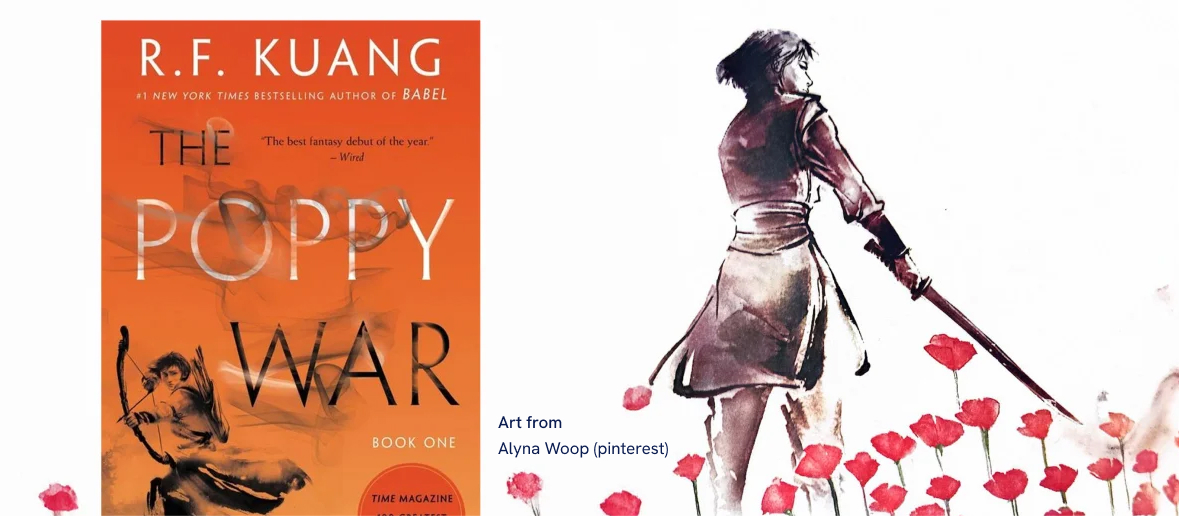
Lesson #1: Grounding Grimdark Fantasy Book Recommendations in Real History
Kuang has never been subtle about what The Poppy War is really about: it’s a wartime story that draws heavily from some of the darkest, bloodiest conflicts in 20th-century East Asian history. While you can debate how much the fictional empire of Nikan diverges from real-world China, the story gets dead serious, very quickly. The brutal realities Rin faces—going from a penniless orphan student to a ruthless commander—come straight from real historical records, sending the stakes sky-high.
Kuang doesn't mince words. Specific events in the novel, like the destruction of Golyn Niis, directly mirror harrowing real-world tragedies like the 1937 Nanjing Massacre. Experiencing these atrocities through Rin’s eyes feels far more realistic—and terrifying—than most war fiction.
In a lot of stories, war feels like something characters briefly engage in just to keep the plot moving. Kuang removes that illusion entirely. Rin and her companions are shaped by the violence around them, driving them to make reckless, desperate, and often terrible decisions in the name of strategy, revenge, or simple survival. They are deeply flawed. But those flaws make sense because they are rooted in a harsh reality: there is no clean right or wrong in The Poppy War—there is only survival or death.
Her characters represent competing real-world philosophies, too. Kitay constantly butts heads with Rin as she veers into fiery nationalism, acting as a gentle voice of reason who understands the tragedy on both sides of Nikan’s war. At the same time, he represents Nikan’s privileged upper class, reflecting the built-in biases of his upbringing. Kuang never smooths over these friction points just to make her cast more likable.
As Kuang put it on V.E. Schwab’s podcast No Write Way:
"It’s easy to make really flawed characters when you’re writing from history… because there are no heroes."
Lesson #2: Balancing Magic Systems in Grimdark Fantasy Books with Real Consequences
While much of The Poppy War is grounded in history, its magic system certainly isn't. Shamanism in this series is a masterclass in how to build a hard magic system with clear rules, hard limits, and severe consequences. It also leans into one of my favorite tropes: power that slowly drives you mad.
In Kuang’s world, calling upon the gods requires a conduit—specifically, using opium to alter your consciousness and commune with the divine realm. But opium is a destructive, highly addictive drug, something Rin grew up witnessing in her backwater hometown.
Rin descends from the Speerlies, a slaughtered race deeply tied to a god known as the Phoenix. Channeling the Phoenix grants her terrifying control over fire. But the Phoenix is cruel, demanding, and constantly pushing its host to burn everything in sight—including themselves. Rin isn't just fighting enemy armies; she's constantly resisting the madness of the god inside her while battling severe addiction and withdrawal.
What makes this magic system work so well is how Kuang sets it up. She makes Rin the logical inheritor of this power. Despite constant warnings from her mentor, Jiang, Rin’s background as a low-class outcast makes her desperate enough to take the deal anyway. Flame gives her military leverage. It turns her from an easily discarded orphan into someone who commands fear and respect. Kuang even gives us a glimpse of Rin's future through Altan—the traumatized, opium-dependent senior commander Rin idolizes, who serves as a dark mirror of what she is destined to become.
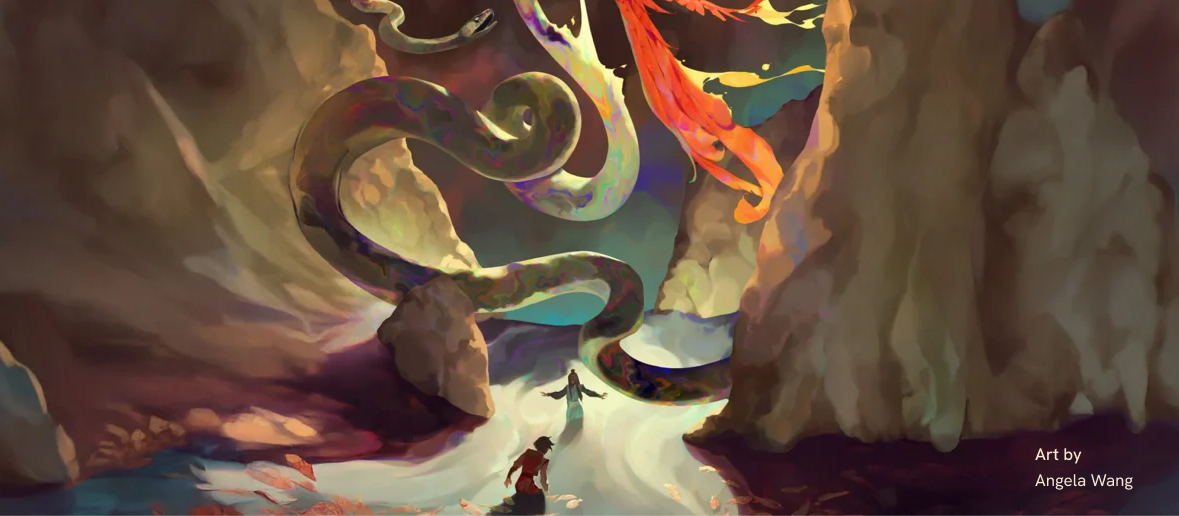
Lesson #3: Shifting Desires vs. Consistent Core Beliefs
Every main character in The Poppy War ends up in a wildly different place than where they started. Not a single main character stays static, which is tough to pull off over three thick novels, but essential if you want to write an epic series.
Rin is one of my favorite protagonists of all time because her trajectory—from a humble country girl to a vengeful deity of destruction—is so tragic, yet feels completely earned. Through it all, her core nature stays remarkably consistent.
Rin’s arc is driven by a desperate need for safety and agency. From chapter one, she is willing to endure extreme physical pain to survive and prove her worth. Early on, she burns her own arm with hot wax just to stay awake while studying for the national academy exam. Later, that same compulsion leads her to break her own bones to escape enemy chains. Accepting the self-destructive power of the Phoenix isn't a sudden left-turn for her character—it’s the escalation of a pattern she established in chapter one.
Her core personality doesn't change, but her desires shift as the war corrupts her. Early in the series, when her commander brutally executes a prisoner, Rin almost vomits in horror. By the final book, after her goals have shifted from basic survival to pure vengeance, she doesn't hesitate to unleash unimaginable atrocities to win.
This is why Kuang’s characters feel so complex yet believable: their core traits don't change, but their goals and boundaries do. Rin was always fiercely determined and prone to rage. Nezha was always bound by duty to his family. Kitay was always the voice of reason.

Clearly, I could ramble on about The Poppy War for hours. R.F. Kuang satisfies the academic in me, and to be completely honest, this trilogy set the benchmark for the kind of dark, morally complex storytelling I hope to achieve in my own writing someday.
If you’re looking for grimdark fantasy book recommendations that challenge you and stay with you long after the final page, pick up The Poppy War. You won't regret it.
Also, if you’re working on a story and thinking about putting it out there on Quibble, we’d love to check it out. Take a look at this blog post for a breakdown of the latest tools and features you can lean on when publishing on the app.
Read any great story lately? Let us know in our subreddit gauntlet or join our chaotic community of wordsmiths on Discord!