Quibble Blogs

Haruki Murakami’s Kafka On the Shore: A Study in Unique Approaches to Storytelling.

Hello readers!


March has begun, and the first usher of spring has come over Austin. This is one of the better seasons to be located in Texas (the other being autumn) before the summer hits and the air feels like a preheated frying pan against your skin.


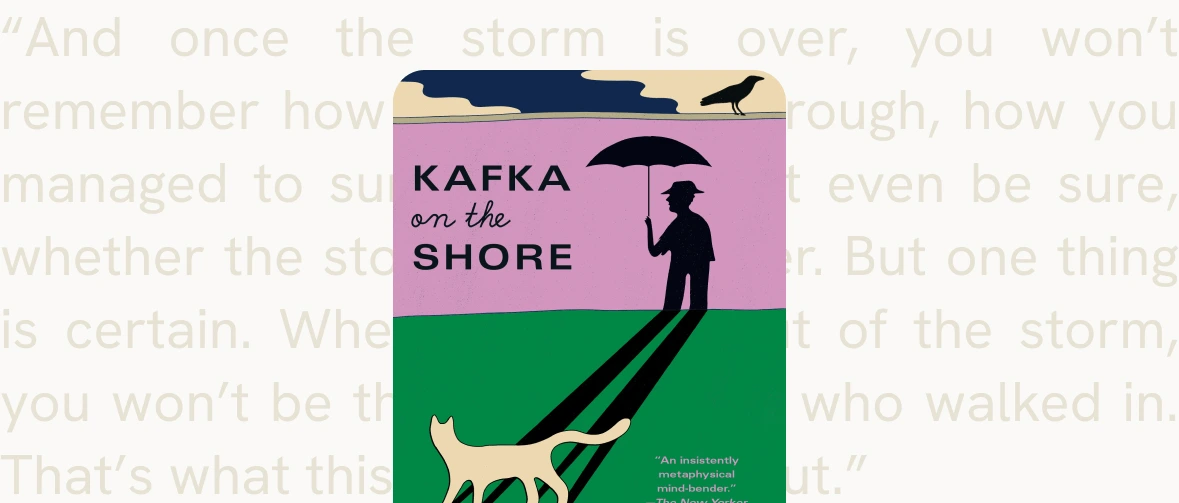
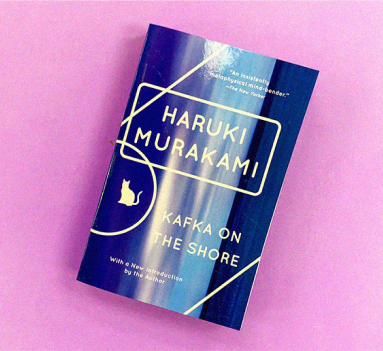
It’s the perfect weather to be talking about Haruki Murakami, whose stories sort of embody the spirit of spring, of youth and new beginnings. I’ve recently finished Kafka on the Shore, and as it is my very first Murakami book, I have some thoughts. The main one being that so much can be learned from his particular style of storytelling.

Haruki Murakami is an award winning Japanese author known for his books that feature a unique blend of ordinary world stuff and magical realism.

Born in 1949, Kyoto, Murakami attended Waseda College, studying drama and theater before opening a jazz bar with his wife. He didn’t start writing until he was 29 years old, when he was struck with sudden inspiration during a baseball game. That same day he began to write his debut novel Hear the Wind Sing, which went on to win the prestigious Gunzo Award for new writers.


Murakami describes the feeling of knowing he could write as “a warm sensation” in the heart, something I too have experienced from time to time.
This warmth is the opposite emotion to self-doubt, and Murakami seems to be imbued with it. He is a deeply honest writer, intent on putting out the truth of his experience on the page–which is really the heart and soul of why any of us do this, isn’t it?


A generational talent, Murakami possesses a deeply unique creative watermark. Below, I cover the elements that make his style so special, and how to apply them to your own storytelling.


*Mild spoilers for Kafka on The Shore ahead.

1. Learn slow and deliberate pacing


One of the most common things I find myself critiquing on when I offer editorial feedback is pacing. Most of the time it tends to be because the story is too slow–meaning it doesn’t pay off on established promises quickly enough. For example, a fantasy adventure that takes four pages walking us through the character’s entire morning routine is detrimental to the core promise of that story, which is, well, fantasy adventure.


Murakami’s books don’t make promises based on the genre, rather, they make promises based on his particular brand of storytelling. Kafka On The Shore’s  promise is not as outwardly high tension or adventurous as what you might expect from fantasy, but suggests a calm, contemplative approach specific to Murakami’s strengths as an author. He uses the slower pacing of his scenes to deliberately draw our attention to his characters’ inward journey, often to demonstrate a moment of introspection. For example, during Kafka’s stay at the cabin, virtually nothing outwardly progressive is happening in the story, however, we get an inward look at Kafka’s experience with the natural world and his insights about isolation.


Now, this only works because Murakami has also laid out an effective crumb trail for the unknown elements of Nakata and Kafka’s story–there are mysteries abound, and these slower character insights function alongside the tension. You can be the best writer in the world, but you still need an element of intrigue to a story to keep an audience engaged. Murakami is unique in that he manages to do this while imparting his own wisdom through his characters in the form of a personal philosophy or observation about the world. This makes slower pacing is integral to Murakami’s storytelling style, it becomes an expectation of his style rather than a grievance.


If there’s anything to be learned from this, it’s that pacing is ultimately tied to the type of story you are looking to tell. Think about what effect you would like your story to have on its audience, and what perception you’d like to have as an author. Is it a murder mystery that’s meant to keep readers on the edge of their seat? A dreamlike romance meant to re-contextualize the definition of love? Choose wisely, and pace accordingly.

2. Develop a unique voice and storytelling instinct


Murakami’s stories promise only one thing up front: that they are Murakami stories.

Each time we write, we impart a bit of ourselves into our work, a signature that makes it unique. This is faint at the beginning of our writing journey, but becomes stronger over time. Murakami possesses a particularly vivid signature in his work, derived from from his developed talent, worldviews, and themes.
In an interview, he describes his process like this: when he is writing, Murakami doesn’t think. Instead, he relies on an innate storytelling instinct, revisiting his works in progress like an ongoing dream and refining inconsistencies later.


There are two approaches to writing: You are either a gardener, like Murakami, or you are an architect, like myself. A gardener doesn’t really plan their story–perhaps they have a good idea of the ending or certain elements to the plot or characters, but by and large, they grow everything from the ground up. Like revisiting a dream.


On the other end of the spectrum, an architect meticulously plans their narrative, writing summaries of chapters, mapping character motivations, and generally being highly neurotic about every detail of their plot. At least, that’s my experience with my own work.


Because they are less stringent about their story’s manifestation, I’ve noticed gardeners have naturally unique voices, and tend to hinge their books on that selling point. Murakami is no exception to this and infuses his stories with unexpected elements, insightful wording, making the slower moments of his works significant, but also adding surprisingly intense sequences. Part of this is cultural, Japanese stories have different cadences than Western ones. But it is also uniquely Murakami.


For example, when I first picked up Kafka On The Shore, I was anticipating a very light-hearted story about identity. However, in Murakami’s world, whimsy lives alongside gore, self discovery can reveal unpleasant truths. His book wasn’t what I thought it would be, but something that only Murakami could have produced.
Like any other author, if you wanted to write stories exactly like Murakami, it’d be impossible. However, there is one main rule that he seems to abide by to achieve his unique voice: be unexpected while recounting the true nature of the world around you. Let whimsy and tragedy be neighbors on the page. Draw elements of your cultural background into your narrative, and express revelations on your worldview and philosophy through your characters. 

3. Be experimental


On top of his style and voice, Haruki Murakami also isn’t afraid to be experimental, and has mentioned his desire to challenge himself with each novel by trying new things. Kafka on The Shore exemplifies this perfectly, as Murakami set out to write it in third person alongside first person for the first time in his career. This was uncommon at the time Kafka was published, and still rare to find in novels today.


If there’s any critique that Murakami receives for his stories, it’s that his novels tend to feature only one type of protagonist: a man on a journey of self-discovery. Murakami has obviously found other boundaries to push in his writing, but it’s also worth mentioning that he seems to have worked to perfect this particular type of story and protagonist, or perhaps feels it is the most serviceable to his novels’ ultimate goals. He seems to have moved on from this, as some of his more recent works such as 1Q84 feature different plot-lines and female protagonists. Either way, it’s clear he is constantly working to master himself and his craft.


The last bit of advice Murakami can give us is this: be experimental, but also seek out how you can become a master of one aspect of your craft. Perhaps you excel at writing revenge stories, or tell stories revolving around young women. Either way, finding ways to challenge yourself while honing a particular aspect of your stories seems to be how Haruki Murakami has continued to make headway as one of Japan’s most celebrated authors.

Kafka On The Shore was my first Murakami book, but it certainly won’t be my last. The way he interweaves the dreamlike mysticism of his stories with ordinary life is magical.
Do you have recommendations for which Haruki Murakami book I should read next? Join Quibble’s discord and let me know!


Thanks for reading, and see you next week!

Emerson and the editorial team
[email protected]

Never miss a post from The Editor’s Desk.

Join the bi-weekly newsletter where Emerson breaks down the techniques and creative processes of great authors and industry voices.

    Join the discussion on Discord.

    Share your thoughts on this post with other writers on the Quibble community.

    Find more posts like these on Reddit.

    Get feedback and answers from other writers and readers figuring it out alongside you.